Resilient Parenting
Parenthood has never been as complex as it is today.
Not because you are less capable. Quite the opposite.
But because the world is full of expectations, images, and opinions — and because everyday life is busier than ever.
You are up to the task, with your strength and perseverance.
And still: it can be lighter.
And it can be easier.
For you — and for your child.
Five online sessions.
In a group where nothing is required of you.
Where you quickly discover that everyone is facing similar challenges.
With clear, accessible insights from a licensed psychologist, and simple exercises you can come back to in the app whenever it suits you.
No tricks.
Just understanding, recognition, and relief.

General information
Online program combining theory and experience sharing
Five weekly sessions of 90 minutes each
Access to the online course environment for additional exercises
Suitable for all parents, including couples
Supervised by mental health psychologists
Cost: €250
100% reimbursed under Zilveren Kruis supplementary insurance from 1 star
Program content
Session 1 – A baby in the 21st century: societal malleability and attachmentLearn about the reality behind perfect images of parenthood and the malleability of society. Discover what attachment really is and why “good enough” is often just right. And why we can't really do any better.
During this first session, we explore the high expectations placed on parents in our malleable society and what that means for you and your child. We discuss the phenomenon of hyperparenting and its impact on parents and children, and explain how the concept of “good enough parenting” and the circle of security can help build a healthy relationship. In interactive discussions and breakout rooms, you will reflect on your own experiences and expectations. We conclude with a short mindfulness exercise.
Session 2 – Stress and sleepStress and fatigue are, unfortunately, part of life with young children. In this session, we explain how stress and sleep work and explore ways for you to deal with them.
In this session, we discuss how sleep deprivation and stress are normal for parents of young children, and why it has such a big impact on your behavior and emotions. We treat stress as a survival mechanism and explain how you can stay within your “window of tolerance.” Together, we explore strategies for recognizing, acknowledging, and accepting stress, and we share practical tips. Breakout rooms provide space to share experiences and learn from each other.
Session 3 – Recovery: it's not that easyUnderstand your body and hormones after giving birth, and discover how you can realistically recover and build resilience.
This session is all about recovery, the real version. We explain how hormones such as oxytocin, prolactin, and cortisol affect your mood and energy after giving birth. You will learn that gloominess, fatigue, and tension are a normal part of recovery, and you will be given tools for rest, nutrition, and light exercise. You will exchange tips and experiences in breakout rooms. We will also discuss the influence of social media and outside information on your confidence as a parent. Without telling you how to do it. A mindfulness exercise will help you to consciously focus on your recovery process.
Session 4 – The parent relationship: together in an individual societyDiscover how aging changes your relationship with your partner and how you can shape new roles and expectations together.
We explore how pregnancy and parenthood influence the dynamics between partners. By reflecting on unconscious messages and expectations from your family of origin, you gain insight into your own ideas about “what is right and how things should be.” We discuss friction, jealousy, and different rhythms in daily life, and practice finding a new balance. The family tree assignment and conversations in pairs help to raise awareness of old patterns and create a flexible vision of your parental relationship.
Session 5 – Finding a new balance and returning to workFind a realistic balance between parenting, work, and time for yourself, and learn to manage your capacity and workload.
This session focuses on finding a new balance. We look at all the roles you have at work, at home, and in parenting, and reflect on unconscious messages about the division of tasks as an individual and as a partner. Together, we discuss practical ways to increase resilience and reduce stress, for example by creating “islands of hope” and consciously planning time for yourself. Breakout rooms provide space to share experiences and exchange tips. Finally, we discuss the motherhood and fatherhood paradox and emphasize that “good enough parenting” is often the best you can do.

Does this sound familiar?
You're afraid you're not a good parent.
You often feel tired, empty, or exhausted, even after sleeping.
You feel ashamed or guilty: “Why can't I just handle this?”
You miss the old version of yourself: freedom, energy, spontaneity.
You sometimes feel lonely, even when you're surrounded by people.
You feel pressure from social media: other parents seem to be doing better.
You sometimes find it difficult to enjoy your baby, even though you love him or her.
You experience tension in your relationship due to fatigue or misunderstanding.
You feel unprepared: “Why didn't anyone tell me this?”
You notice that you are more easily angered or irritable.
You find parenting boring and unchallenging.
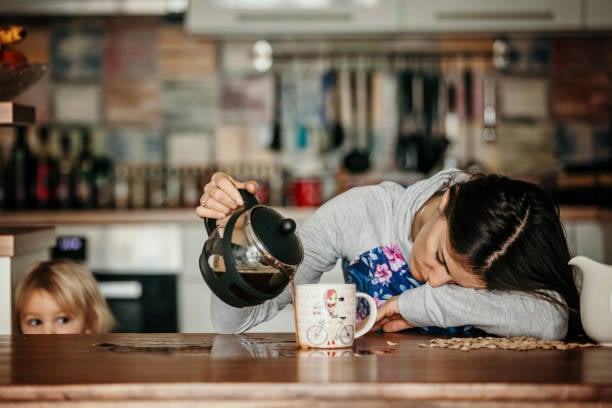
For parents

As an international parent, the English-speaking group was invaluable. It helped me reflect on cultural expectations and created a strong sense of belonging.
“You were in control. Until you had a baby.”
Everything was planned. Your career, your vacations, your diet.
Until someone came along who decided at 4 a.m.: NO.
A baby is not a project. Not an Excel spreadsheet.
A baby cannot be managed.
The online program Resilient Parenting tells you the honest story. There is no such thing as the perfect parent or the perfect child. This is an inconvenient truth in a society where we think and believe that everything is possible. Research shows that, particularly in Western individualized societies, confidence in parenting has declined in recent decades.
Unfortunately, social media is not ‘the new village’. On the contrary. But we do need a certain 'village'; a place where we can learn from other parents. Fear and uncertainty are part of parenting. And it really helps to share all those feelings with each other.
With the Resilient Parenting program, we try to broaden what is considered normal (everyone just does what they can, because no one knows for sure) and strengthen the feeling of togetherness (I am not alone).
“As an international resident who recently gave birth in the Netherlands and does not yet speak Dutch, access to an English-speaking psychological support group is in itself a rare and invaluable resource. The course also helped me reflect on unrealistic expectations placed on new parents within Dutch society and compare them with perspectives from my own cultural background. Most importantly, connecting with other parents created a strong sense of belonging and reminded me that we are not alone.”
“The program is a great tool to navigate the first months of having a baby and understanding the psychology and physiology of it all. It’s really interactive, so it allows you to connect with other parents in the same situation. It really helped me feel less alone in the parenting ocean.”
“A lovely mix of academic theory, storytelling and reflection on life as a new parent. It’s about so much more than just parenting. I wish I’d taken this course sooner.”
For whom is this program NOT suitable?
Exclusion criteria
If there is a mental disorder (psychosis, bipolar disorder, depression, anxiety disorder, or OCD) for which treatment has not yet been started in mental health care
If there is suspicion of a serious mental disorder (psychosis, bipolar disorder, depression, anxiety disorder, or OCD)
In the case of active addiction problems
If there is acute suicidality, for example suicidal thoughts, plans for a suicide attempt
If there is a threat to the baby, for example as a result of a mental disorder or if there is domestic violence
If there is domestic violence, partner violence
If there are serious personality problems
If one or more of the above points apply, we advise you to contact your GP.
Urgent advice in case of a (suspected) mental disorder
If you, your partner, or a healthcare professional suspect that there is a mental disorder, it is advisable to contact your GP as soon as possible. They can then assess the severity of the symptoms and, if necessary, refer you for the appropriate care.
If you are unsure about participating, you can consult your healthcare provider or email us at [email protected].
In case of imminent suicide
If there is a suspicion of imminent suicide, we request that you contact your GP or GP service immediately. When a mother with a baby expresses suicidal thoughts, it is important to immediately contact the family doctor, the emergency medical service, or the police, and not to leave the mother alone with the child.
For referring professionals
The Resilient Parenting course is a prevention program and not a psychological treatment. The course is intended for (expectant) parents who feel uncertain about parenting, are anxious, sometimes a little gloomy, and/or are struggling with their new role. The program does not replace psychological treatment, but can sometimes be a good addition to treatment. The program is taught by BIG-registered psychologists (mental health psychologists, clinical psychologists, or psychotherapists) who have an affinity with and knowledge of this target group and are affiliated with Psyche en Zwangerschap B.V. They have no treatment responsibility for the participants in this program. By choosing these program supervisors, we guarantee quality.
The program is based on two pillars:
providing information about parenting and
sharing experiences with each other.
As of January 1, 2026, the Resilient Parenting program will be reimbursed under the supplementary insurance (from 1 star) at Zilveren Kruis..